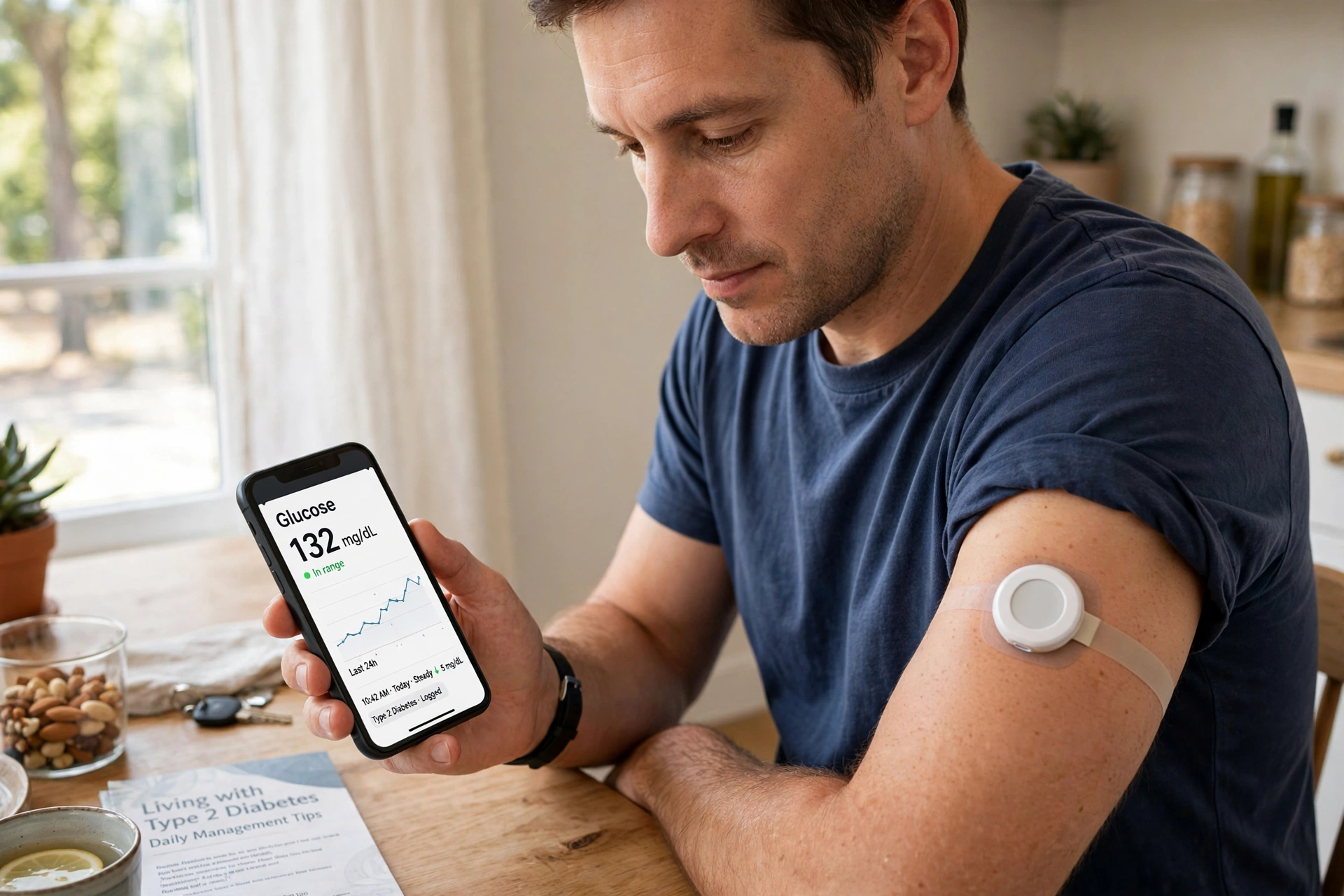

Continuous glucose monitors can transform life with type 2 diabetes even for people who do not use insulin, according to the largest clinical trial of its kind, published in the New England Journal of Medicine. In the study, adults who wore the small sensors spent approximately five more hours each day with their blood sugar in the target range than those relying on conventional monitoring. The findings, reported by the University of Colorado Anschutz Medical Campus, strengthen the case for widening access to a technology long associated mainly with insulin treatment.
What the Trial Found
Continuous glucose monitors, usually worn on the upper arm or abdomen, measure sugar levels in the fluid beneath the skin every few minutes and send the readings to a phone or receiver. Instead of a handful of finger-prick tests, users and their clinicians can see a full picture: overnight lows, post-meal spikes and the effects of exercise, sleep and stress, all in near real time.
In the trial, that visibility translated into measurably better control. Participants using the monitors spent roughly five additional hours a day in their target blood sugar range, a clinically meaningful improvement, because time spent in range is closely linked to a lower risk of the complications that make diabetes so burdensome, from eye and kidney damage to nerve problems and cardiovascular disease. Just as important, the benefit appeared in adults who were not on insulin, a group for whom monitors have historically been harder to obtain.
Why Five Hours Matters
Blood sugar management is often judged by HbA1c, a three-month average, but averages can hide dangerous swings. Two people with the same average can have very different days: one steady, the other lurching between highs and lows. Time in range captures that difference, and clinicians increasingly treat it as the number that matters most day to day.
Five extra hours in range, every day, compounds quickly. It means fewer prolonged highs quietly damaging blood vessels, fewer energy-sapping crashes, and a clearer sense for patients of which meals, walks and routines actually work for them. Many users describe the feedback loop itself as the real medicine: seeing a glucose rise begin after a meal, and watching a short walk flatten it, teaches lessons no pamphlet can match. Readers following newer diabetes treatments may also be interested in our article on how quickly people notice changes with Ozempic.
A Shift in Who Gets the Technology
For years, continuous monitors were prescribed mainly to people with type 1 diabetes or type 2 diabetes treated with insulin, and coverage rules reflected that. Yet the majority of people with type 2 diabetes do not use insulin, and many struggle to keep readings in range with medication, diet and finger-prick checks alone. A large, rigorous trial showing clear benefit in exactly this population gives doctors, patients and insurers a stronger basis for changing that.
Guidelines from bodies such as the American Diabetes Association have already been moving towards broader use of glucose monitoring technology. Evidence of this scale is likely to accelerate the shift, particularly as devices become smaller, easier to wear and available for longer periods between changes.
What It Means If You Have Type 2 Diabetes
The practical message is not that everyone must rush to buy a sensor tomorrow, but that monitoring deserves a place in the conversation at your next appointment, even if insulin is not part of your treatment. A trial period with a monitor can reveal patterns that years of occasional testing miss, and many clinicians now use a short period of monitoring diagnostically, to fine-tune medication and lifestyle advice, whether or not the device becomes permanent.
It also helps to know how monitoring fits alongside medication. Our guide to how fast Mounjaro works explains the timelines patients can expect from one widely discussed treatment, and the same principle applies here: technology and medication work best together, each making the other easier to judge.
The Bigger Picture
Diabetes care is quietly becoming a data story. Wearable sensors, smart insulin pens and connected apps are moving management away from occasional snapshots and towards continuous understanding, and this trial suggests the benefits extend well beyond the insulin-using minority. Five more hours a day in a healthy range is not an abstract statistic; it is better sleep, steadier energy and, over years, a meaningfully lower risk of complications.
As the evidence builds, the question for health systems will be less whether continuous monitoring helps people who do not use insulin, and more how quickly access can catch up with the science. For the millions of adults managing type 2 diabetes today, that shift cannot come soon enough.